
What is the difference between Picosecond and eyebrow remover?
There are some important differences between small picoseconds (picosecond lasers) and eyebrow removers (usually nanosecond Q-switched lasers) in terms of technical principles, pulse widths, and application effects:

Technical principles:
Eyebrow removers generally use Q-switched lasers, which produce laser pulse widths at the nanosecond level, such as 20 nanoseconds.
Small picosecond lasers are a more advanced laser technology with a shorter pulse width, at the picosecond (1 picosecond = 1 trillionth of a second) level, usually 500-700 picoseconds.
Pulse width:
The pulse width refers to the time the laser beam irradiates the skin. A shorter pulse width means that energy can be released in a very short time, thereby reducing thermal damage to surrounding tissues.
Because the pulse width of picosecond lasers is much shorter than that of nanosecond lasers, it can achieve more precise energy delivery, and in theory, it can more effectively decompose pigment particles and cause less damage to surrounding tissues.
Treatment effects and side effects:
Eyebrow removers may cause more heat accumulation due to longer pulse widths, which may increase pain and inflammatory reactions after treatment, and sometimes may also cause side effects such as pigmentation or hypopigmentation.
Picosecond lasers are generally considered to provide a more comfortable and faster-recovering treatment experience, and reduce the risk of certain side effects, due to their extremely short pulse width, which can destroy pigment particles without generating excessive heat.
Scope of application:
Eyebrow removers are mainly used to remove pigmented lesions such as tattoos, eyebrows, and eyeliner.
In addition to removing pigments, picosecond lasers are also widely used to improve skin quality, reduce fine lines, and tighten skin.

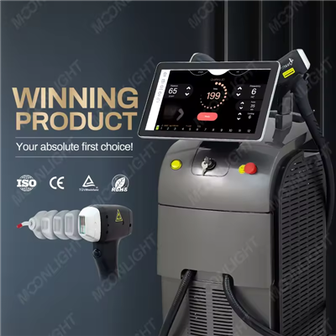
In order to meet the needs of customers, we have upgraded the desktop tattoo removal machine, which has the following main advantages. Click to view more product information, or you can contact us directly for more details
1. Extremely short pulse width: The pulse width of the picosecond laser is very short, usually at the trillionth of a second (picosecond) level. This ultra-fast speed means that the laser can act on the target area with extremely high energy density while reducing thermal damage to surrounding healthy tissue.
2. Efficient pigment removal: Due to its high-energy and fast characteristics, the picosecond laser can more effectively break up the melanin particles in the skin, making these small particles easier to be naturally metabolized by the body. This is particularly effective for removing pigmented lesions such as spots, freckles, and chloasma.
3. Promote collagen regeneration: Picosecond lasers using specific modes (such as honeycomb lenses) can stimulate the dermis to produce new collagen without damaging the epidermis. This helps improve skin texture, reduce fine lines and wrinkles, and achieve the effect of firming the skin.
4. Low risk and fast recovery: Because picosecond laser causes less thermal damage to the skin, it has fewer side effects than traditional nanosecond laser treatments, such as a lower risk of redness, bruising or pigmentation. In addition, patients have a relatively short recovery time.
5. Multi-purpose applications: In addition to whitening and lightening, picosecond lasers can also be used to remove tattoos, treat acne scars, shrink pores and other beauty needs.
6. Fewer treatments: Picosecond lasers often show obvious results in a shorter period of time and may require fewer treatments than traditional lasers to achieve the desired effect.
7. Non-invasive and comfortable: Picosecond lasers are non-invasive treatments that usually do not require anesthesia, and patients experience a more comfortable experience, with only mild discomfort in most cases.
8. Wide range of indications: Picosecond lasers are suitable for a variety of skin types and are a relatively safe choice for people of different skin colors.
9. High safety: Because the energy of picosecond lasers is concentrated and released in a very short time, it does not cause heat accumulation, thereby reducing the risk of burns or other thermal injuries.