
AI Laser Hair Removal Machine: 9 Smart Features Buyers Must Verify
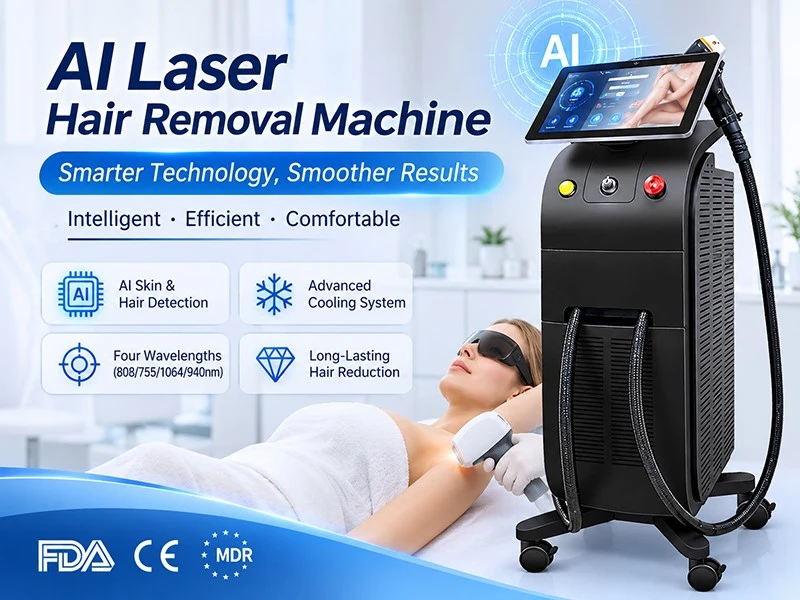
"AI-powered" may describe simple presets or a system that records client profiles, analyzes entered skin and hair information and recommends starting parameters. Buyers should verify each smart function through a live demonstration and written quotation.
Quick Buyer Summary
- Ask the supplier to demonstrate the complete skin-and-hair data-entry workflow.
- Confirm whether the system recommends parameters or adjusts them without operator review.
- Test client-record creation, search, editing and backup before ordering.
- List every included spot size, software version and customization item on the invoice.
-
1. Define What the AI Actually Analyzes
Ask which inputs the software uses. These may include entered skin tone, hair characteristics, treatment area or client history. The supplier should demonstrate the input screen and explain which data points influence the recommendation.
A buyer should reject vague claims such as "automatic intelligent treatment" unless the seller can show the exact workflow. AI-assisted recommendation should support-not replace-a trained operator's assessment and the final operating manual.
2. Distinguish Recommendations From Automatic Control
A recommendation system proposes a starting program; automatic control changes settings itself. During a live demonstration, enter two client profiles, compare the suggestions and confirm that the operator can review and record the final selection.
3. Test the Client Management System
The current MNLT D3 AI laser hair removal platform lists storage for more than 50,000 client profiles. Ask the salesperson to create, search and edit a sample profile, add treatment history and explain backup options.
4. Verify Magnetic Spot Sizes One by One
Interchangeable spots affect coverage and positioning, but "multiple spots available" does not mean every adapter is included. The D3 information lists five magnetic options:
| Spot Size | Buyer Evaluation Point |
|---|---|
| 16 × 37 mm | Broad-area coverage option |
| 16 × 30 mm | Large and medium-area workflow |
| 16 × 23 mm | General positioning |
| 16 × 17 mm | More controlled placement |
| 6 mm | Precision option for small zones |
Ask the supplier to fit and remove each spot during the video demonstration. Every included size should appear on the quotation, packing list and proforma invoice.
5. Check Whether Software and Hardware Match
Compare on-screen options with the product label, configuration sheet and invoice. If several hardware packages are available, require a demonstration of the version being produced. Use the 10-point diode laser quotation checklist to normalize accessories, warranty and shipping terms.
6. Confirm Language and Branding Scope
For private labeling, define the startup logo, interface language, housing, nameplate and packaging. Confirm MOQ and request an approval video or sample before production.
7. Ask About Updates, Backup and Service Access
The purchase order should identify the software version and support process. Buyers should ask:
- Can client records be backed up or exported?
- Who can reset administrator access?
- Are updates installed locally or remotely?
- Will customized software remain supportable?
- What evidence is required when reporting a software fault?
These questions are especially important for distributors supporting multiple machines in different locations.
8. Match Compliance Files to the Exact Configuration
A certificate logo on a product page is not enough. Request the actual file and check the legal manufacturer, model, standard, report number, issuing organization and validity.
Also ask whether changes to the handpiece, wavelength, power supply, software or enclosure affect the documented configuration. The broader 12-check beauty-machine manufacturer verification guide explains how to connect product claims with supplier and factory evidence.
9. Compare a Real AI Platform, Not a Marketing Label
Clinics and distributors that want to inspect a full product example can review the MNLT AI diode laser machine with smart skin and hair detection, client management and magnetic spot options.
Distributors planning private-label or regional resale programs can also review the MNLT diode laser hair removal machine wholesale and distributor program before defining MOQ, branding and support requirements.
This reference should be used as the start of technical due diligence-not as a substitute for it. Ask for the current configuration sheet, a live interface demonstration, included accessories and product-specific documents before paying a deposit.
Buyer FAQ
Does an AI recommendation remove the need for a trained operator?
No. It provides decision support. The operator must assess the client, review the proposed settings and follow the applicable manual and local rules.
How can I verify a client-record capacity claim?
Ask for a live software demonstration covering profile creation, search, history entry, editing and backup. Put any required data-management function in the purchase specification.
Should all magnetic spots be included in the base price?
Not necessarily. List every required size on the quotation and invoice instead of relying on "multiple spots available."
What should distributors confirm before requesting private labeling?
Confirm the MOQ, logo position, interface language, startup screen, model label, packaging, sample approval and future software support.
What information should I send for an accurate quote?
Provide your country, buyer type, quantity, voltage, preferred wavelength and handpiece package, required spots, compliance needs, OEM scope and shipping term.
Request a Demonstrable AI Laser Configuration
Do not request only an "AI machine price." Ask the supplier to quote the exact software, handpiece, spot package, voltage, documents, customization and Incoterm.
Request the MNLT AI laser configuration sheet, live software demonstration and FOB/DDP shipping quotation.